





Before you leave...
Take 20% off your first order
20% off
Enter the code below at checkout to get 20% off your first order

Discover summer reading lists for all ages & interests!
Find Your Next Read
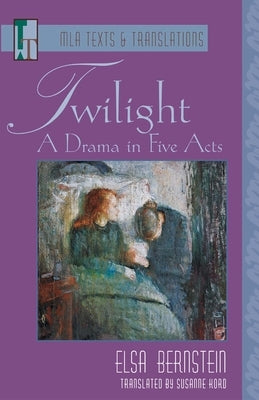
Elsa Bernstein lived at the center of Munich's cultural life from the 1890s into the next century. Her literary salon was frequented by such authors as Rainer Maria Rilke, Theodor Fontane, Henrik Ibsen, and Thomas Mann. Her plays, written under the pseudonym Ernst Rosmer, are noteworthy for their unconventional female figures, uninhibited language, taboo subjects, and realistic detail. Susanne Kord, the editor and translator of D舂merung, discusses the reception of Bernstein's works--at first enthusiastic, then increasingly sexist--and the theme, in D舂merung, of the culturally sanctioned oppression of women.
In this naturalist drama, a woman eye surgeon treats the daughter of a man who is prejudiced against educated women. Her successful treatment wins the father's affection for her, and they fall in love. She is ready to give up medicine for wedded bliss--her wish is to become "very happily stupid--but finds misery instead.
Elsa Bernstein (1866-1949), though of Jewish descent, was a Christian and a member of Germany's educated elite. During the Holocaust, she survived the Theresienstadt concentration camp through her classification as a prominent person--a status conferred on her through the intercession of Richard Wagner's daughter-in-law, a friend of Hitler. Susanne Kord has published on eighteenth- and nineteenth-century women playwrights in Germany. She has published poetry in several anthologies and journals, and translated German dramas into English.
Thanks for subscribing!
This email has been registered!
Take 20% off your first order
Enter the code below at checkout to get 20% off your first order