




Before you leave...
Take 20% off your first order
20% off
Enter the code below at checkout to get 20% off your first order

Discover summer reading lists for all ages & interests!
Find Your Next Read
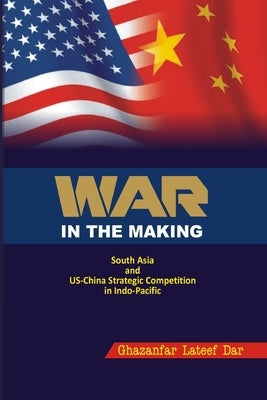
The end of World War II marked the beginning of a new world order under the leadership of the United States. This war resulted into division of Europe. Western Europe became part of the US led Capitalist Block and formed the North Atlantic Treaty Organization (NATO). Eastern Europe became part of the Socialist Block under the leadership of Soviet Union and formed alliance of the Warsaw Pact countries.
Sequel to its strategic alliance with Europe, the US in 1948 approved European Recovery Program, commonly known as the "Marshall Plan" for reconstructing economies of war torn Western Europe. A financial assistance of US$12 billion was allocated for the Marshall Plan (Steil, 2018).1 The Bretton Woods institutions like World Bank (WB) and International Monetary Fund (IMF) were also established to facilitate the process of economic and physical reconstruction. Taking a humble start from European Coal and Steel Community (ECSC) of six countries created to regulate their industrial production under a centralized authority, the organization evolved through different stages of cooperation and integration till on November 1, 1993 at Maastricht, Netherland, it was declared European Union (EU). It is now efficiently steering the whole range of intra-regional as well as extra-regional issues including political, economic, trade, security, regional governance, and socio-cultural cooperation among the European nations. The Europe today stands as a well-integrated region of the world.
The nature of United States' relations with Europe, besides being economic, was also pre-dominantly military due to latter's neighbourhood with Soviet Union. Accordingly, Europe and Atlantic Ocean were considered to be the major arena of post-World War II global power politics (Cold War) between the US and USSR. However, quite interestingly though, the actual contest of super powers at the height of Cold War manifested itself in South Asia, when the Soviet Union invaded Afghanistan in 1979. Unlike Europe, South Asian states after their independence from colonial rule, had not been able to evolve a well-placed intergovernmental mechanism for regional cooperation. Although SAARC had been formulated in 1985, but it could not institutionalize a meaningful regional cooperation. As a result, in the absence of a collective regional approach, most countries of South Asia suffered the damaging and destabilizing effects of the two most significant strategic events that included, the US/West sponsored Afghan Jihad against Soviet Union, and the US led coalition/NATO's invasion of Afghanistan after 9/11. Soviet invasion of Afghanistan culminated into the defeat and break up of USSR and end of the Cold War in 1991.
Thanks for subscribing!
This email has been registered!
Take 20% off your first order
Enter the code below at checkout to get 20% off your first order