



Before you leave...
Take 20% off your first order
20% off
Enter the code below at checkout to get 20% off your first order

Discover summer reading lists for all ages & interests!
Find Your Next Read
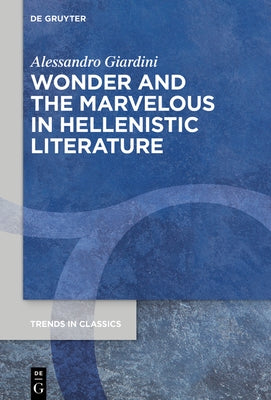
This volume explores the concepts of wonder and the marvelous in literary and philosophical texts from the fourth and third centuries BCE.
It argues that wonder--an emotion whose distinct cognitive significance was recognized early in Greek culture--is depicted by Hellenistic writers as the defining emotion of knowledge acquired through literature. In this context, these authors use wonder as a means of engaging allusively with the relationship between knowledge, literature, and philosophy, in close dialogue with Plato's and Aristotle's theories of wonder--the earliest theoretical conceptualization of this emotion in Western culture and a key element in these philosophers' critique of literature's cognitive value.
By examining the works of Theopompus, Callimachus, Aratus, and Apollonius of Rhodes--while also considering important figures such as Xenophon, Chrysippus, and the Historians of Alexander--this book reconstructs this important cultural debate. It demonstrates how wonder functions as a literary tool to reaffirm literature's capacity to convey cognitively and ethically meaningful content, bridging a gap in modern studies on wonder - a crucial topic for understanding the history of Western civilization.
Alessandro Giardini, Scuola Normale Superiore, Pisa, Italy.
Thanks for subscribing!
This email has been registered!
Take 20% off your first order
Enter the code below at checkout to get 20% off your first order